Welcome!
Conservation discourse is changing constantly. How, why, and sometimes even if, indigenous cultural material should be preserved when it is outside of its maker society is an ongoing issue in which precedents are still being set.
Some cultural heritage items will be repatriated in the future, in which case it will be advantageous for the receiving community to have some understanding of the conservation treatments they may have undergone while in a museum collection. For this reason you will find here a glossary of commonly used conservation terms that may be useful in interpreting conservation records or reports associated with items. It can be difficult to find this information in accessible and simple terms so it is hoped that this glossary can be a resource for anyone looking to understand basic conservation conditions.
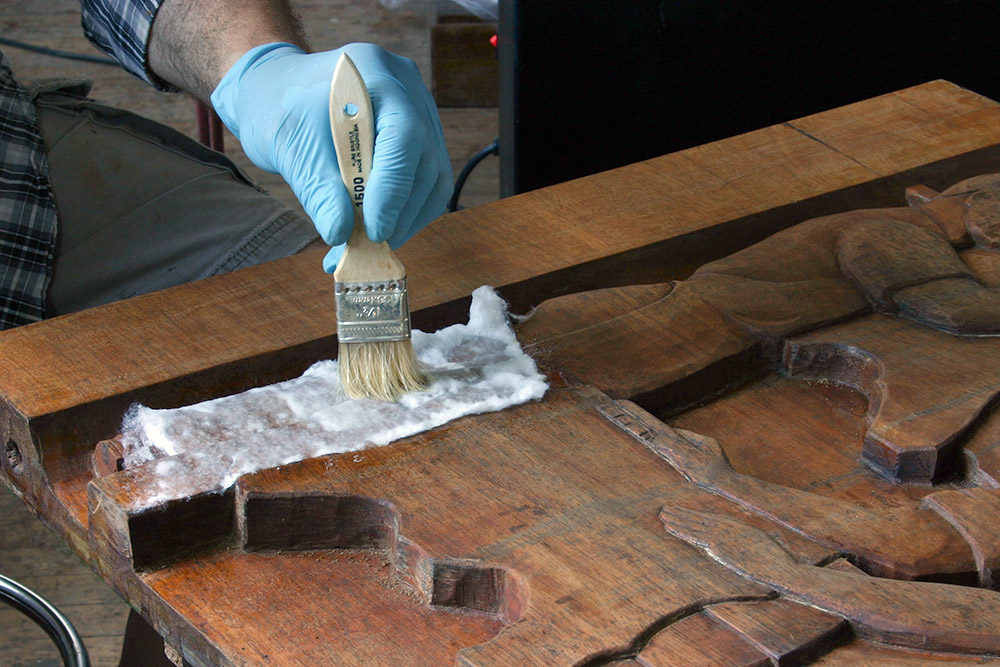
Not all culturally significant items will be repatriated immediately, if at all, so it is also helpful to see what collaborative care can look like between an indigenous community and the institution that holds its material, while the items remain in museum care. It is certainly the case that origin communities can be heavily involved not only in the future care of these items, but in forming future protocols for partnerships of this type. To understand what this can look like, a case study can be found on this website in the form of Paikea, a wooden carving that is the ‘living’ ancestor of many indigenous people in Aotearoa New Zealand.
There is also a review of “Stewards of the Sacred”, a collection of essays and thoughts derived from a conference on these issues of culturally appropriate care of indigenous collections. It is a helpful brief summary of current discourse from museum professionals. Please refer to the Bibliography and Resources for further information.
Site by Genny Scheil
Image source: https://www.conservation-design.com/the-conservation-of-wood-sculptural-reliefs