How this case study can be of use
The following is an example of an indigenous item from Aotearoa New Zealand that has been in the United States since 1907. Its circumstances can be used in interpreting conservation terminology and the evolving nature of community and non-professional conservation. Though this item is not currently the subject of a repatriation claim, it may be a useful case study for thinking about the care of items to be repatriated in the future, especially if no conservation treatment history accompanies their repatriation.
Paikea; the whale rider
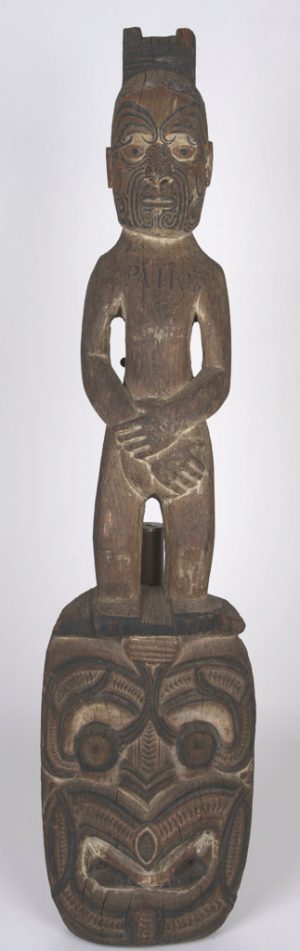
This wooden carving is of Paikea; an ancestor of many iwi (tribal groups) on the eastern coast of Aotearoa New Zealand. This carving was created in the 1890s and is considered to be a living being; the only survivor of an attack at sea, who called on his whale ancestors to come to his aid. They carried him to Aotearoa, earning Paikea his other moniker; the ‘whale-rider’.
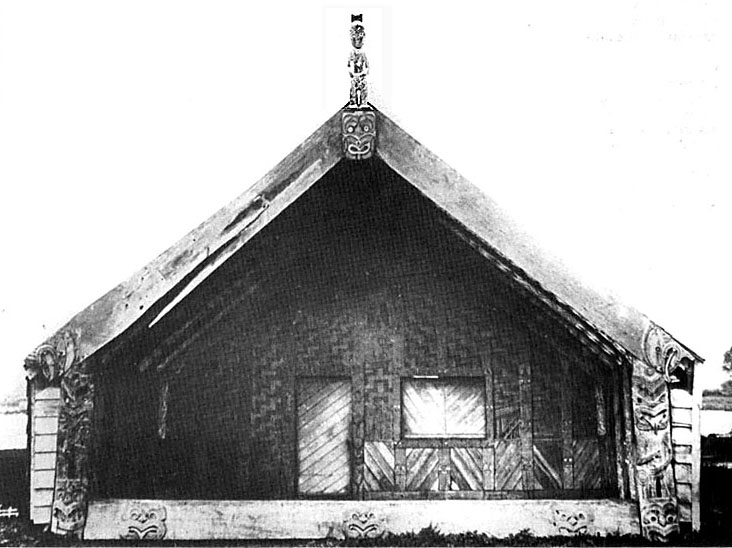
In the late nineteenth century, a carved meetinghouse was built and named after a leader know as Te Kani a Takirau, who was a descendant of Paikea. The carving of Paikea on a whale that we see here stood at the top of the gable of this meeting house for twenty years. Sometime before 1907, Paikea was taken to the United Kingdom to join the collection of Major General Robley, and later sold to The American Museum of Natural History in New York City, where he has remained ever since.
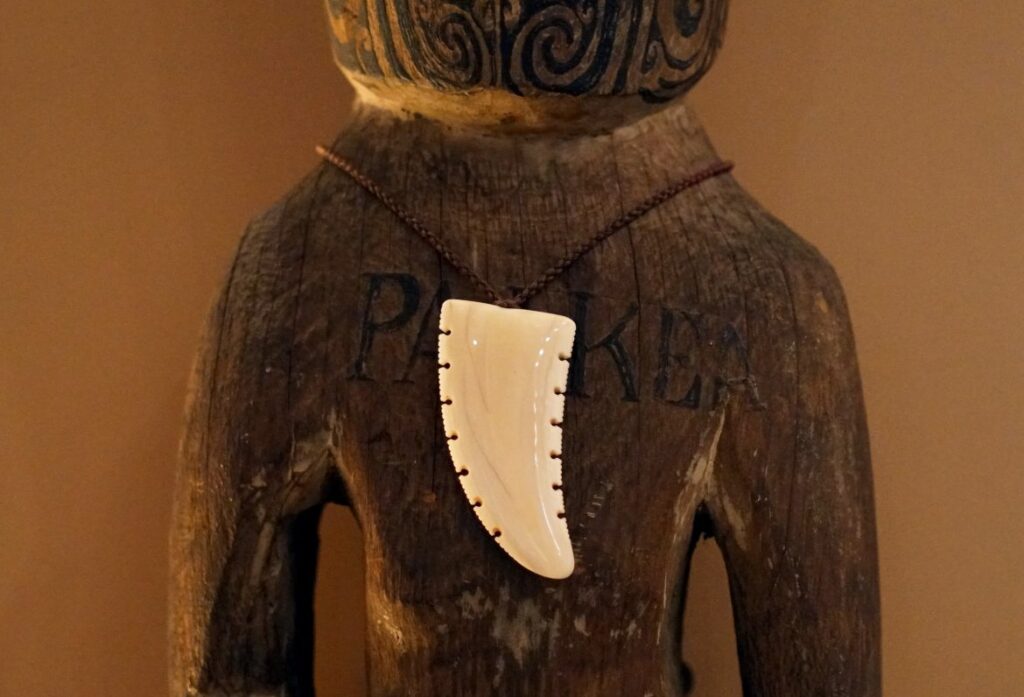
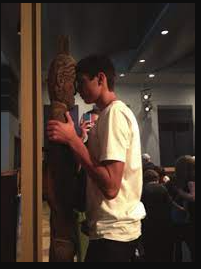
In 2013, a group of Paikea’s descendants visited him in New York, reconnecting their ties to him after his absence from Aotearoa for over a century. In addition to communicating with Paikea, both verbally and by touch, the group gifted a taonga (treasure) to him in the form of a pendant carved from a sperm whale’s tooth. The museum was initially not able to accept this gift due to conventions on international trade in endangered species, until 2017 when the paperwork needed to allow the pendant to stay had been approved.
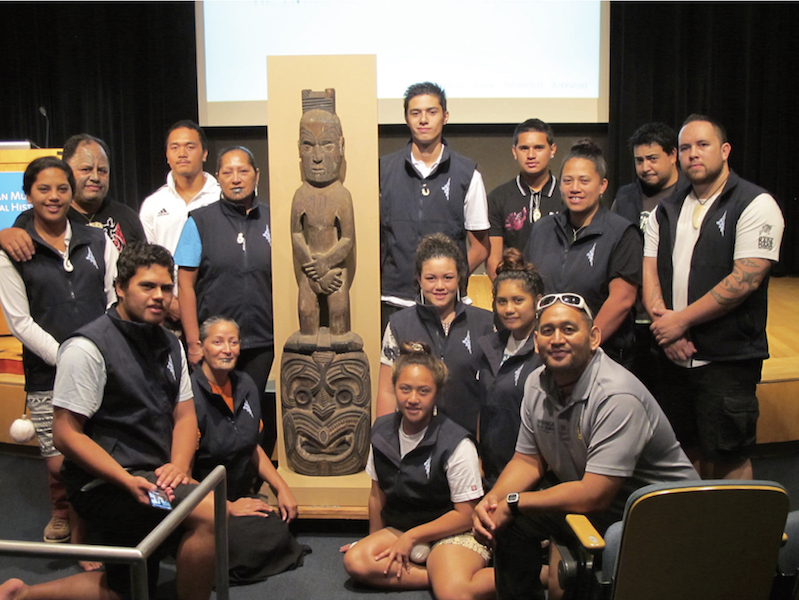
This is significant for the fact that Paikea’s descendants attempt to engage with him in traditional ways was hindered by outside systems that do not recognize indigenous practices. Had Paikea never left New Zealand he would have received the care and guardianship befitting an ancestor, and not subjected to controls beyond tribal authority.
Tribal customary guardianship is an integral part of Maori life and their culture in general often looks to the past to inform the future. For Paikea’s descendants he is not considered an ‘antique’ but rather a living and central part of iwi identity. The future of conservation for Paikea lies in the stewardship of his descendants. They keep him alive in stories, songs and oratory and personal identity. This brings into question the future of conservation and care methods that are not traditional to Western museums and are not always accommodated by Western conservation protocols. If Paikea is once again to be handled, touched, and interacted with, in a non-museum setting and without conservators, it will be important to know if he has been subject to toxic substances or conservation materials that will impact his reception or relationship with his descendants.
What treatments has he undergone and what should his descendants be looking for?
The first step in understanding the conservation treatments Paikea has undergone since his arrival in a museum collection (and he almost certainly has been treated) is to consult the conservation treatment report from the museum. In Paikea’s case, no conservation report could be found. This is fairly common for items that have not been loaned out of their institutions recently (since these loans usually prompt a condition report to be undertaken). In this case, there are a series of important questions that should be considered to ascertain if any of the treatments he has undergone are potentially toxic or have any implications for spiritual or customary use.
For example, did the item join a museum setting before 1970? If so it may have been treated for pests with arsenic, mercury salts or other toxins.
Is the wood surface cracked? If so it may have been consolidated with an acrylic polymer which, though it does not pose a health risk, may have implications for spiritual or customary objects for which the addition of artificial or outside materials in culturally inappropriate. These are examples of the kinds of things a source community may need to look into for repatriated items. There are many more treatments that the community should be aware of. A helpful resource for more examples is the Conserv-O-Gram produced by The National Park Service.
Paikea’s future care will be influenced by the partnership being built between the American Museum of Natural History and Paikea’s descendants. For both parties this is intended to be a permanent living relationship between Paikea and his family.
In Maori tradition the mihi, or personal introduction, tribal members use starts with a person’s geneology and ancestors and ties to land, water and spiritual home. The individual’s name comes last of all. Paikea is not an object, but rather a key to his descendants understanding their own identity.
To get a sense of what other indigenous communities are doing to integrate traditional care into museum practice please see the page “Shifting Discourses of Care”. More resources can be found in the Bibliography.
Sources:
Lythberg, Billie, Jennifer Newell, and Wayne Ngata. “Houses of stories: the whale rider at the American Museum of Natural History.” Museum & Society, 13 (2) (March 2015): pp. 195-220.
Lythberg, Billie, and Wayne Ngata. “Te Aitanga a Hauiti and Paikea; New Histories of Pacific Whaling.” RCC Perspectives, No. 5, (2019), pp. 105- 112.
Lythberg, Billie. “Multiple Dialogues: Interpreting Ethnographic Collections in the Twenty-First Century: Papers from the Annual Conference of the Museum Ethnographers Group Held at the National Museum of Scotland, Edinburgh, 16–17 April 2012.” Journal of Museum Ethnography, no. 26 (2013), pp. 181-186.