Literature review
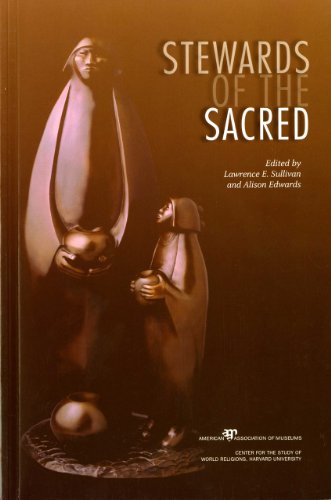
This literature review examines the book, Stewards of the Sacred, published in 2004 by the American Association of Museums in cooperation with the Center for Study of World Religions, Harvard University.
From the outset this publication positions itself in a long history of conversation about what ‘culturally appropriate’ care looks like, or should look like, for indigenous items in museum collections. Part 1 of the book is a series of essays from the 2001 conference of the same name. Though she is not cited, the content responds to issues brought up in, for example, Linda Tuhiwai Smith’s work, in the way that it seems to directly address many of the concerns she has written and spoken about. More specifically, I was reminded of her passage,
There is … amongst indigenous academics, the sneaking suspicion that the fashion of post-colonialism has become a strategy for re-inscribing or reauthorizing the privileges of non-indigenous academics because the field of post-colonial discourse has been defined in ways which can still leave out indigenous peoples, our way of knowing and our current concerns.[1]
These essays center closely on the initiatives that individual institutions are implementing (and continue to develop) in order to hand a share of decision making to indigenous communities and recognize that “cultural” conservation requires insight and, to some degree, permission from these communities (though this is not to suggest that an equal partnership between museums and maker-groups has been achieved). Authors from various museums present in this text what could commonly be called the ‘traditional care program’ of their individual institutions which, in a North American context, often coincides time-wise with the NMAI Act and NAGPRA. Many of these programs have had to evolve ad-hoc, based on encounters with specific items, tribal groups, and tribal protocols on a case by case basis.
It is interesting to note details such as how recently, for example, ‘native’ art was in some cases referred to as ‘primitive’ art (1989 in this example), or how recently other important terms and concepts have emerged. Even framing museum care as ‘custodianship’ rather than ‘ownership’ is still not current practice for many institutions. Some excellent examples are presented, however, such as in Japan, where many temples have asked museums to store, care for, and sometimes exhibit their sacred treasures, while the temples generally still retain ownership of the collections.[2] The Osaka Municipal Museum of Art houses approximately 200 pieces of Buddhist sculpture and paintings owned by nearby temples. Once a year, monks from one of the temples come to the museum to hold a prayer session in front of their statues, while the gallery is closed to the public. The monks and their rituals are an indispensable part of the care of the religious objects at the museum.[3]
Another example is the Woodland Cultural Center in Ontario, which has a system of “Caregiver Contracts” under which an indigenous person associated with an object can take a mask, for example, from the museum and return it after using it in a ceremony. Several longer-term agreements have also been negotiated with designated caregivers.[4]
It is interesting to consider items eligible for repatriation because of NAGPRA that remain in collections by choice of the affiliated group due to lack of tribal resources, absence of an appropriate repository to hold or re-bury, and/or presence of hazardous materials on artifacts. This has been a particular issue for Hopi where masks and clothing are unable to be used. The Peabody Museum of Archaeology and Ethnology returns these items with a written warning about the harmful chemicals it may have been treated with.[5] This stands out as very important to me because there is no set protocol that all museums must follow in returning objects that could be chemically hazardous. It seems that it is up to the individual institution to provide information to the Native community, and the onus is on them to suggest any safety precautions. One interesting note was made about taking into account how an item is physically used and where it will make contact with user’s skin in order to inform safety recommendations about handling (although in many cases having just basic hazard information would be helpful).
What is clear from all of the essays is that the choice of terminology, and how those terms may have evolved in meaning, is critical to understanding these issues. To assume that all parties are relying on the same interpretation has proven to be unrealistic. Even “respect” has distinct meanings and varying connotations. Physical anthropologists may believe that they are treating human remains with “respect” by refraining from any “destructive” form of analysis, while Native representatives may regard any handling at all or simply the possession of an ancestor’s human remains as disrespectful.[6]
In Part 2 of the book, Developing Draft Policy Guidelines, the important issue is raised of objects that are “living” entities or retain a “living spirit.” In some instances they require feeding and human interaction to remain “healthy”. There is also the question of extending the life span of an object inappropriately, when some are meant to age and deteriorate.[7] For issues like this the National Museum of the American Indian is implementing a Collections information System, a central database where staff can record sensitive collections information received from Native community representatives and post decisions concerning the special care or handling of culturally sensitive collections. There is a hierarchy of access controls but the content is also used for staff education around sensitive collections.[8] To my mind, this is the kind of tool all museums with indigenous content should have. Although sensitive issues are dealt with, necessarily, on a case-by-case basis (and obviously protocols vary hugely) this kind of database could be easily adapted. Especially in the case of museums that do not have the staff or funding to create their own sensitive collections database, sharing between institutions seems like an obvious path to me. There is also the fact, however, that this is not the NMAI’s first attempt to establish such a program. In fact, they cite at least half a dozen similar attempts since 1994.[9]This is clearly a complicated process in which uniform applicability is not an option, and extensive work on the ground is required in every instance.
As the issues covered in this book are only going to increase in relevance to museums and indigenous collections, the kind of conference that spawned this collection of essays and documents will play a big role in how the museums protocols that deal with culturally sensitive collections are developed. This conference took place in 2001 and, though the content is still very timely, it will be important for to find out how the plans and protocols outlined here have played out in practice, and what future conferences of this type will look like.
[1] Linda Tuhiwai Smith. Decolonizing Methodologies: Research and Indigenous Peoples, second ed. (London: Zed Press, 2012), 25.
[2] Lance Sullivan, Lance. Stewards of the Sacred. (Washington, DC: American Association of Museums in cooperation with the Center for the Study of World Religions, Harvard University, 2004), 99.
[3] Ibid. 100
[4] Ibid. 87
[5] Ibid. 120
[6] Ibid. 109
[7] Ibid. 108
[8] Ibid. 110
[9] Ibid. 109